
Writers' responsibility
The things we write impact people, especially children.

I've been reading a collection of essays by Diana Wynne Jones called Reflections. It's a bunch of things she wrote for various magazines or talks, all collected together. Some of them float around various corners of the internet.
Anyway, one of the things that has stuck with me is the way stories affect children and adults. She has lots of examples of times people came up to her and told her how deeply some of her words affected them--or how much they were affected by the Piper at the Gates of Dawn chapter of the Wind in the Willows. (Incidentally, that's the only chapter I remember of that book.)
I've especially pondered her example of a blueprint.
Fantasy certainly does provide comfort--and who is not entitled to a little comfort if they can get it? For those who need that, it is the mind's perfect safety valve. But a child reading, say, a fairy story is doing a great deal more. Most fairy stories are practically perfect examples of narratives that fit the pattern of the mind at work. They state a problem as a "what if" from the outside. "What if there were this wicked uncle? That evil stepmother, who is a witch? This loathsome monster?" Stated in this way, the problem (parent? bully?) is posed for the widest number of people, but posed in a way that enables the reader to walk all round it and see the rights and wrongs of it. This uncle, witch or monster is a vile being behaving vilely. As these beings will invariably match with an actual person: parent, sibling, schoolfellow, what a child gains thereby is a sort of blueprint of society. Reading the story, he or she is constructing a mental map--in bold colors or stark black-and-white--of right and wrong and life as it should be. Turning to the actual parent or schoolfellow, where right and wrong are apt to be very blurred, this child will now have a mental map for guidance.
An important part of this mental map is that the story should usually have a happy ending--or at least an ending where justice is seen to be done to villains and heroes alike. This is again part of life as it should be. The mind, as I have said, is programmed to tackle problems, joyfully, with a view to solving them. An ending that suggests--because the writer believes it to be "realistic"--that all you can attain is some lugubrious half measure, means that all children will set out to achieve will be that half measure. And, since you rarely achieve all you aim for, what these children will actually get is an even drearier quarter measure, or less. So it is important that the blueprint instructs them to aim as high as possible.
Diana Wynne Jones - Writing for children: a matter of responsibility
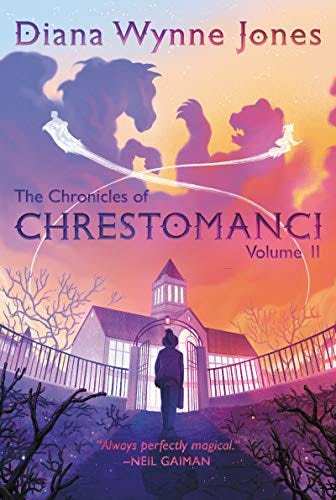
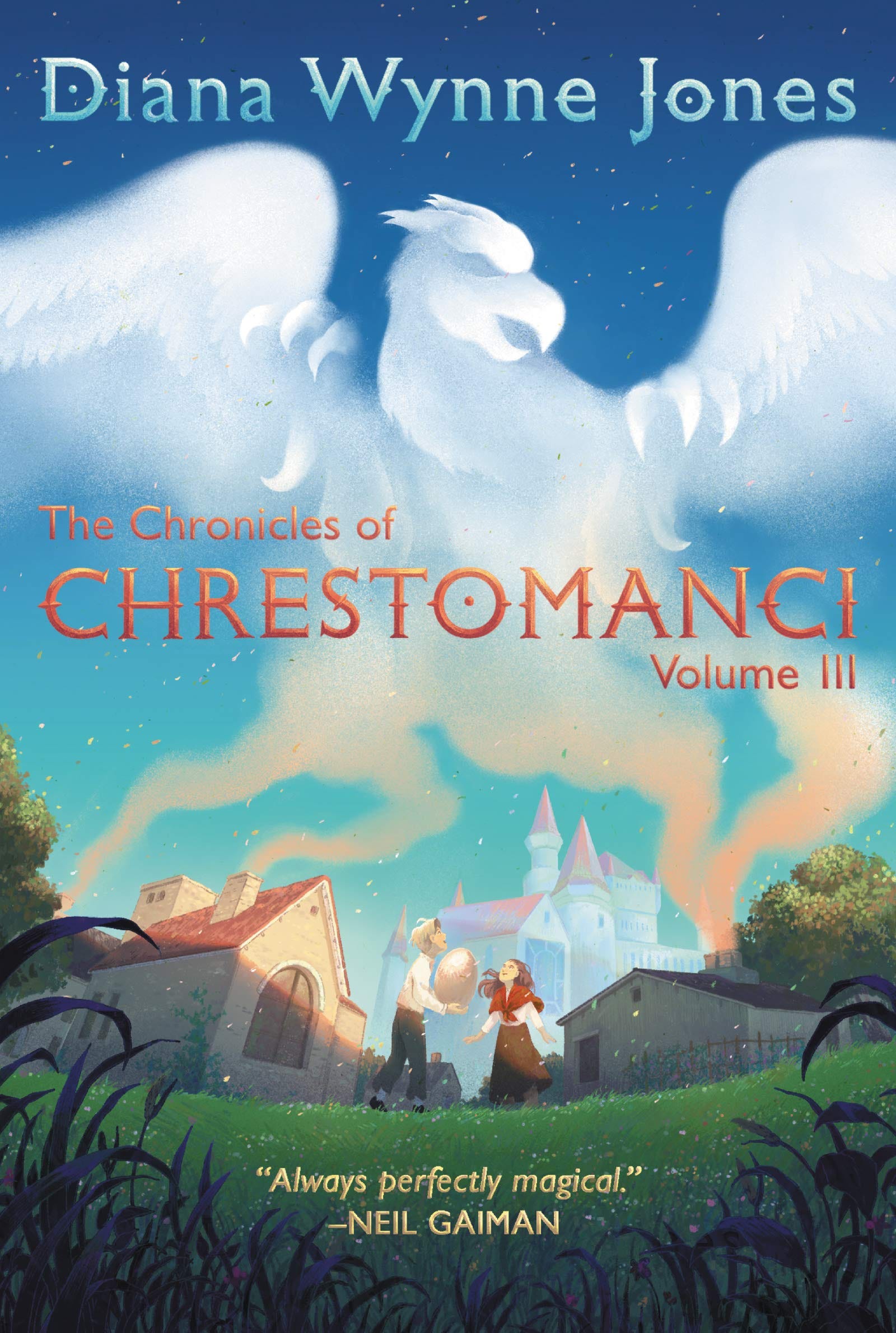
The Chrestomanci series by Diana Wynne Jones. Excellent middle grade series and I wish there were more.
As I've chewed on this, it's made me take a step back and evaluate the books being churned out for teens these days. The Young Adult genre is, quite frankly, a cesspool. Somehow we jumped from Middle Grade, with its adventures and heroic characters, to the angst-ridden sex-obsessed teen lit. It's awash in angst and every perversion known to man. Sometimes a decent book with a decent story floats to the top, but the genre's hallmarks are still there.
What kind of blueprint are these books providing for kids? Especially teens, who are dealing with hormones and trying to figure out their place in life? The Free Love agenda is still alive and well, even though we're living in its awful aftermath--serial polygamy, single mothers, a swelling welfare class, the degradation of women. But somehow, YA misses that. Many authors preach the agenda hard, providing a foul blueprint for teens to follow.
I'm glad Twilight took off the way it did. Whatever else people say about Twilight, it preached abstinence. Against the backdrop of other YA offerings, it's a refreshing change.
It's made me ponder my own works. What sorts of things am I promoting? Am I providing a positive blueprint? Because someone, somewhere will read my books, and it might very well stick in their imagination and affect their life choices. Heaven knows my fanfics have already affected many peoples' lives. I hope it's mostly in a good way.
Originally written in 2013
My books are YA (at least in my eyes), but they are clean (no sex, no crude language, only a little violence) and engage with deep themes. But, sadly, the general public wants what we're getting. Or perhaps it is that the publishers are only publishing smut, and the general public accepts it as what YA novels are.
So true! I always feel weird comping my YA work to the likes of Diana Wynn Jones and Gail Carson Levine but there are very few wholesome and sweet YA books to compare to so I have to compare to MG books that have generational appeal!